Key facts
- Official attachments include scopes, suppressors, flashlights, and extended magazines.
- Every shot creates noise and attracts attention, according to the official feature list.
- The Glock, shotgun, and sniper rifle are named in official patch notes; arrows are confirmed too.
- No damage numbers, tier list, or attachment slot count has been published.
Most weapon guides begin with a tier list. This one begins with a constraint: in Never Be Alone, every shot creates noise, and noise attracts attention. A weapon that kills one walker efficiently but pulls a second group is not efficient. It is a trade you chose to make.
Beast Studios has not published damage values, fire rates, range falloff, or a full weapon list. What it has published is a set of attachment categories and a design philosophy. That is enough to build a loadout logic without inventing a spreadsheet.
The confirmed weapon and attachment list
From the official store page and patch notes:
- Glock pistol — named in Demo Update #1 (suppressor rotation fix).
- Shotgun — named in Demo Update #1 (sound volume increase).
- Sniper rifle — named in Demo Update #1 (third-person scope alignment).
- Bow and arrows — arrows are referenced in Demo Update #1; the bow is implied by the ammunition.
- Scopes, suppressors, flashlights, extended magazines — official attachment categories.
That is not a complete arsenal. It is the part of the arsenal the public record names. Treat every other “best weapon” claim as either datamining, demo observation, or invention.
Build around three questions
1. How loud is it?
- Blade or bow: quiet, limited range, requires commitment.
- Suppressed pistol: quieter than a rifle, still not silent.
- Shotgun: loud, close-range, an emergency tool.
- Sniper rifle: loud, long-range, a commitment to a position.
- Vehicle: a continuous noise source, not a weapon.
The louder the tool, the more you need a plan for what hears it.
2. What range does the situation pay for?
- Interior: short range, tight angles, an exit behind you. A shotgun or pistol is easier to bring up than a scoped rifle.
- Street: medium range, multiple approaches. A rifle or pistol with a red-dot-style scope is flexible.
- Treeline: long range, unclear silhouettes. A scope helps you identify before you commit, but the shot still broadcasts.
- Roof or ridge: long range with an escape route. This is where a sniper rifle earns its noise.
3. What is the fallback?
Every loadout needs a quiet option and a panic option. A bow with no sidearm is a plan that ends when the first Feral closes. A shotgun with no blade is a plan that ends when you run out of shells.
Attachment trade-offs, without fake stats
Suppressor
What it does: reduces the noise signature. Official text confirms suppressors as a category; the Glock specifically has one.
Why it matters: noise is the aggro system. A suppressor is the closest thing to a stealth stat in the game.
What it does not do: make you silent. Treat it as a volume knob.
Scope
What it does: extends your ability to identify and engage at range.
Why it matters: target identification is a real problem at dusk and in tall grass.
What it costs: weight, handling, and a narrower field of view in close quarters. A scoped rifle is the wrong tool for a hospital corridor.
Flashlight
What it does: lets you see without giving up your hands.
Why it matters: night visibility is a genuine constraint.
What it costs: attention. A light tells everything nearby where to look. Use it to identify, then decide whether to keep it on.
Extended magazine
What it does: increases capacity.
Why it matters: fewer reloads during a Brute or a group fight.
What it costs: the public record does not quantify handling or weight. Test it in your own build rather than trusting a number.
A practical loadout logic
| Situation | Primary | Secondary | Why |
|---|---|---|---|
| Quiet scavenging | Bow or blade | Suppressed pistol | Low noise; a fallback if a group appears |
| Residential interiors | Pistol | Blade | Tight angles; quick handling |
| Street and road | Rifle or pistol | Blade | Medium range with a quiet fallback |
| Brute or group | Shotgun or rifle | Pistol | Damage and space; do not rely on melee |
| Roof or ridge | Sniper rifle | Pistol | Range with an exit route |
| Night travel | Suppressed pistol | Light + blade | Identify, move, avoid the long fight |
This is a logic table, not a tier list. The best weapon is the one whose noise you can afford in the situation you are actually in.
Melee and tools
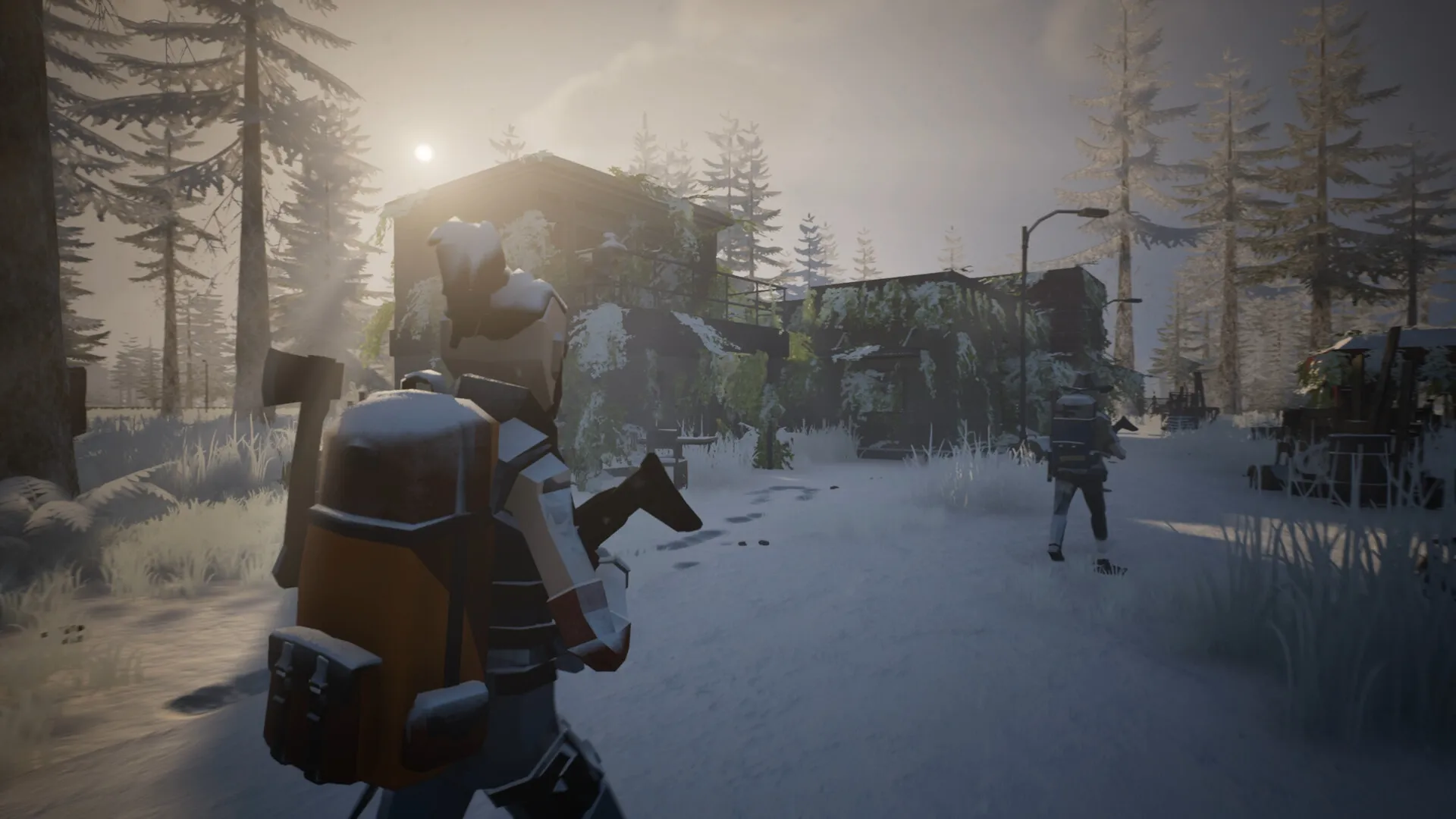
The official feature list does not name a starting knife, but demo players use bladed tools and a pickaxe. The pickaxe is a gathering tool first; it is not a Brute answer.
Melee is for:
- One isolated walker.
- A quiet finisher when you have already broken line of sight.
- Saving ammunition when the alternative is a long, loud fight.
Melee is not for:
- Exploders.
- Brutes.
- Groups in open ground.
- Any situation where you cannot afford to be interrupted.
What is still unknown
- Damage, fire rate, range, and handling values.
- Full weapon roster and rarity tiers.
- Attachment slot rules and compatibility.
- Ammo types and availability.
- Durability and repair.
- Whether weapons can be crafted, upgraded, or only found.
Any page that gives you a complete meta ranking is ahead of the public record. The equipment index keeps the confirmed list and marks the rest as unknown.
Last verified
2026-11-19
This guide combines official Beast Studios information with clearly labelled demo observations. Where the public record is empty, the page says so. See the editorial policy and the full source list.